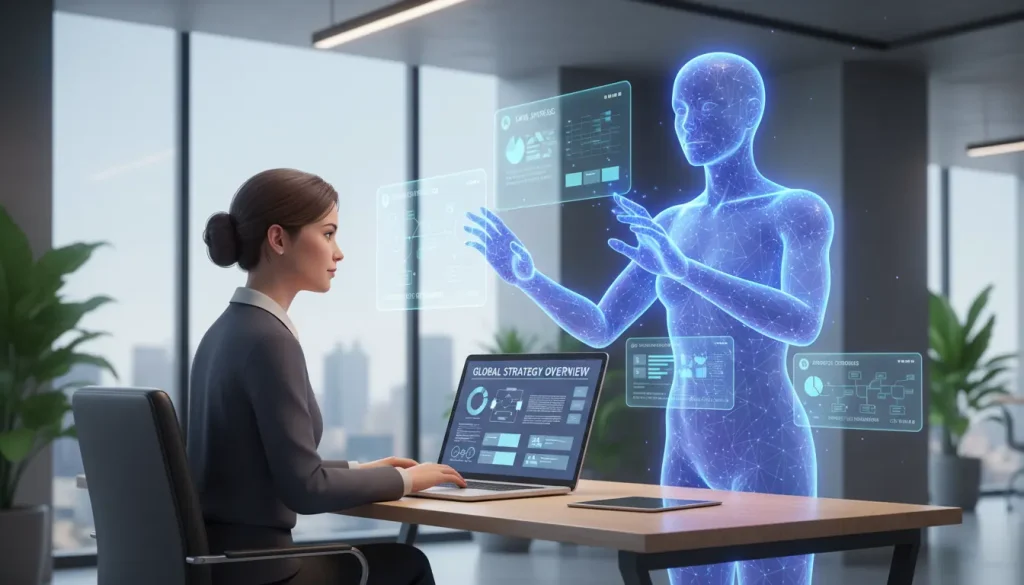
1. The 2026 Sales Paradigm Shift: From Manual Effort to Strategic Value
The 2026 sales mandate requires an immediate departure from the obsolete “bulk selling” models of the past. High-volume, low-value outreach is no longer a viable strategy; it is a recipe for digital noise and buyer alienation. As a Global Sales Strategy Architect, I observe a market that has fundamentally shifted toward a knowledge-worker economy. Survival now dictates a pivot from transactional vending to high-value engagement cycles.
The current “State of Sales” presents a stark paradox: while 81% of organizations claim AI adoption, the vast majority remain in a state of “digital infancy,” using tools for surface-level tasks rather than deep process integration. This roadmap is engineered to bridge that gap, transitioning your organization from manual task management to a human-centric, consultative partnership model. Our objective is clear: automate the clinical to liberate the human. This transformation is anchored by five strategic pillars:
- The deployment of autonomous sales stacks and AGI.
- The architecture of digital self-service for high-ticket B2B.
- The institutionalization of hyper-personalization.
- The transition to a human-centric consultative model.
- The establishment of a personal brand as a trust moat.
——————————————————————————–
2. The Autonomous Sales Stack: Integrating AI Agents and AGI
Strategic competitive advantage in 2026 is defined by cognitive offloading. Moving beyond basic AI prompting to fully autonomous operations allows leaders to re-engineer the sales funnel. We are no longer discussing tools that help humans work; we are deploying agents that work on behalf of humans.
| Feature | Basic AI (Legacy) | Autonomous AI Agents (2026 Mandate) |
| Prospecting | Assists in manual research. | Autonomously identifies and qualifies high-intent leads. |
| Outreach | Generates templates for human sending. | Manages the entire initial contact and follow-up sequence. |
| Meeting Logistics | Provides scheduling links. | Handles complex multi-party dialogues to secure meetings. |
| Operational Logic | Requires constant manual prompts. | Operates via goal-oriented, high-level directives. |
We are currently approaching the horizon of Artificial General Intelligence (AGI). Unlike clinical AI, AGI possesses a level of self-awareness and persona-driven interaction, capable of independent evolution without constant human intervention. This presents a strategic threat to any salesperson whose value is purely informational.
The “So What?” is found in the math of sales. Salesforce and HubSpot data confirm that effective AI integration recovers 2 hours and 15 minutes of manual labor per day. Historically, sales professionals have spent only 30% of their time—roughly 2.4 hours—on actual selling. By offloading 2.25 hours of manual friction, we effectively double the selling capacity of the workforce. This recovered bandwidth must be reinvested into the high-stakes elements of the buyer’s journey.
——————————————————————————–
3. The Digital Self-Service Evolution for High-Ticket B2B
The modern B2B buyer demands total autonomy. Forcing human interaction too early in the cycle is no longer a “service”—it is a strategic friction point. Leaders must recognize the “Tesla Model” for B2B: the expectation that complex, high-stakes solutions can be configured and finalized via digital channels.
The €100,000 threshold is no longer a barrier to self-service. If a consumer can purchase a six-figure vehicle in three minutes online, a B2B buyer expects the same efficiency for enterprise software or industrial equipment.
| The Legacy Friction Model | 2026 Digital-First Journey |
| Gated pricing/specs requiring human “gatekeepers.” | Full transparency via autonomous digital configuration. |
| Physical “tire-kicking” as a prerequisite for trust. | Content-rich, autonomous decision-support environments. |
| Linear, sales-led discovery phases. | Non-linear, buyer-led autonomous evaluation. |
| High-friction, manual procurement for high-ticket items. | Seamless, 24/7 self-service purchasing options. |
Self-service is a strategic option, not a replacement. It caters to the “speed-first” persona while allowing human experts to focus on those who require deep consultation. Once a buyer chooses to step out of the autonomous track and engage with a human, the salesperson must offer a level of value that a digital interface cannot replicate.
——————————————————————————–
4. The Institutionalization of Hyper-Personalization
In an era of data ubiquity, mass-tailoring is dead. True individualization is the new baseline for value-signaling. To penetrate the 2026 market, proposals must be mapped across the Four Levels of Buyer Understanding:
- The Existential Identity (Personal Self): Deep alignment with the individual’s personal values, worldviews, and core drivers.
- The Functional Persona (Work Self): Precision understanding of their specific responsibilities, KPIs, and the metrics by which their success is judged.
- The Sphere of Influence: A comprehensive map of the internal decision-making culture and the hidden stakeholders within the buying committee.
- The Corporate Strategy: Absolute alignment with the organization’s overarching vision and long-term strategic objectives.
Mastering these four levels moves a proposal from “lukewarm” to a resonant strategic directive. It signals that the salesperson is not merely a vendor, but an architect of the client’s specific future.
——————————————————————————–
5. Transitioning to a Human-Centric Consultative Model
The 2026 sales professional must function as a high-level Knowledge Worker. In this landscape, “product vomiting”—the unprompted listing of features—is a terminal symptom of professional obsolescence. If a solution can be bought via a digital channel based on specs, a human who merely recites those specs is redundant.
The human moat is built on insights the buyer has not yet discovered. While AGI can simulate a persona, it remains clinical. The human salesperson’s unique value lies in challenging the status quo and co-creating success. We must use our doubled selling capacity to engage in Value-Based Dialogue, focusing on strategic outcomes rather than technical functions. The internal expert’s digital visibility serves as the essential bridge to initiating these complex, consultative partnerships.
——————————————————————————–
6. Personal Branding as the Foundation of Trust
In 2026, a digital footprint is not a social luxury; it is the fundamental infrastructure of trust. Trust is now built in a strict architectural sequence: 1. Yourself, 2. The Company, 3. The Product. If the buyer does not trust the individual first, the company and product are irrelevant.
The data is indisputable: 75% of B2B buyers audit a salesperson’s LinkedIn profile before the first engagement. If your team is digitally anonymous, they are functionally untrusted. A “Digital Expert Footprint” is the moat that protects the salesperson from being replaced by clinical AI. This is not about “Speaker Brands” for the masses; it is about signaling expertise to the few.
Actionable Branding Steps:
- Insight Generation: Distribute content that challenges industry norms and demonstrates strategic foresight.
- AI-Assisted Consistency: Utilize AI for background research and content drafting to maintain a constant presence.
- Human Nuance: Infuse every communication with personal experience and unique perspectives to distinguish your voice from AGI-generated output.
——————————————————————————–
7. Implementation Roadmap: Phased Integration for 2026
The victors of 2026 will be those who master the intersection of technological autonomy and human-centric partnership. Efficiency belongs to the machines; trust belongs to the humans.
3-Step Action Plan for Sales Leaders:
- Efficiency Audit: Identify every manual friction point—from prospecting to meeting summaries—and offload them to autonomous agents to realize the 2x selling capacity multiplier.
- Channel Diversification: Architect a digital self-service infrastructure that allows even €100,000+ solutions to be purchased autonomously, meeting the buyer where they demand to be met.
- Skill Transformation: Re-tool the sales force. Transition training from product knowledge to “expert brand building” and the four levels of hyper-personalization.
The future of sales belongs to the architects who use technology to handle the routine and humanity to master the complex. The intersection of these two forces is where the 2026 market will be won.
Ready to explore the potential of AI in the cloud?
Contact us today to discuss how to upgrade your cloud environment for the age of AI.